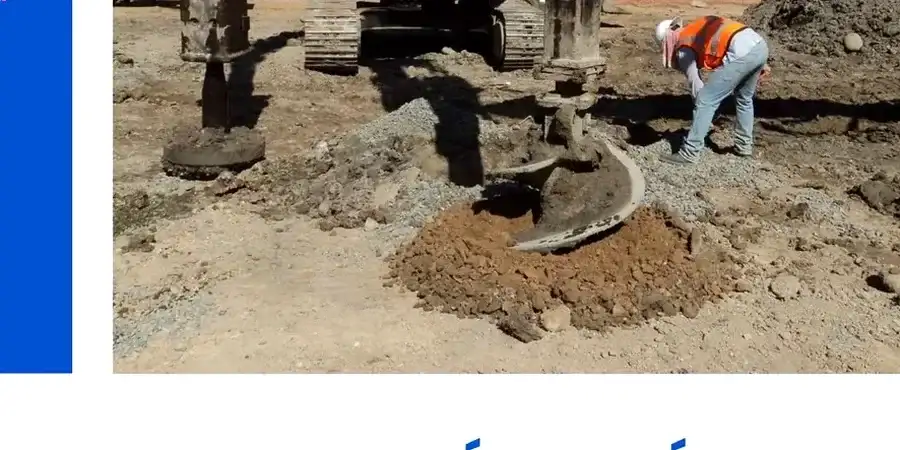
When the split spoon sampler comes out of the borehole with a full shoe of grey-white chalk putty, you know instantly you're dealing with the West Melbury Marly Chalk Formation that underlies much of Luton. The drillers can hear the change in lithology before the sampler even reaches surface—the hollow stem auger grinds differently through the soft weathered chalk versus the hard nodular bands. Our laboratory in Luton processes these samples within 24 hours, running unconfined compressive strength tests on the chalk intact cores while the natural moisture content is still representative. For the overlying clay-with-flints that blankets the hilltops around Blows Downs and Warden Hills, we run consolidated-undrained triaxial tests because the flint clasts mean standard remoulded samples would give misleading strength parameters. Complementing the borehole data with CPT testing gives us continuous stratigraphic profiles where the flint bands prevent clean SPT recovery, a common frustration for drillers across Bedfordshire.
Chalk in the Luton-Dunstable area degrades from Class A to Class C within 2 metres of the surface—assume nothing from the borehole log until the lab confirms intact dry density.