GEOTECHNICAL ENGINEERING1
LUTON
HomeInvestigationCPT (Cone Penetration Test)

CPT Testing in Luton: Cone Penetration Test Services

Rigorous testing. Clear reporting.

LEARN MORE

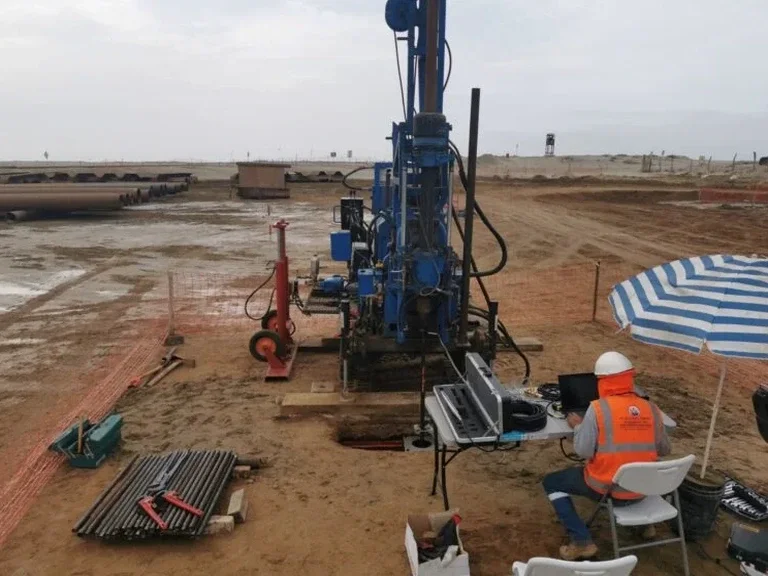
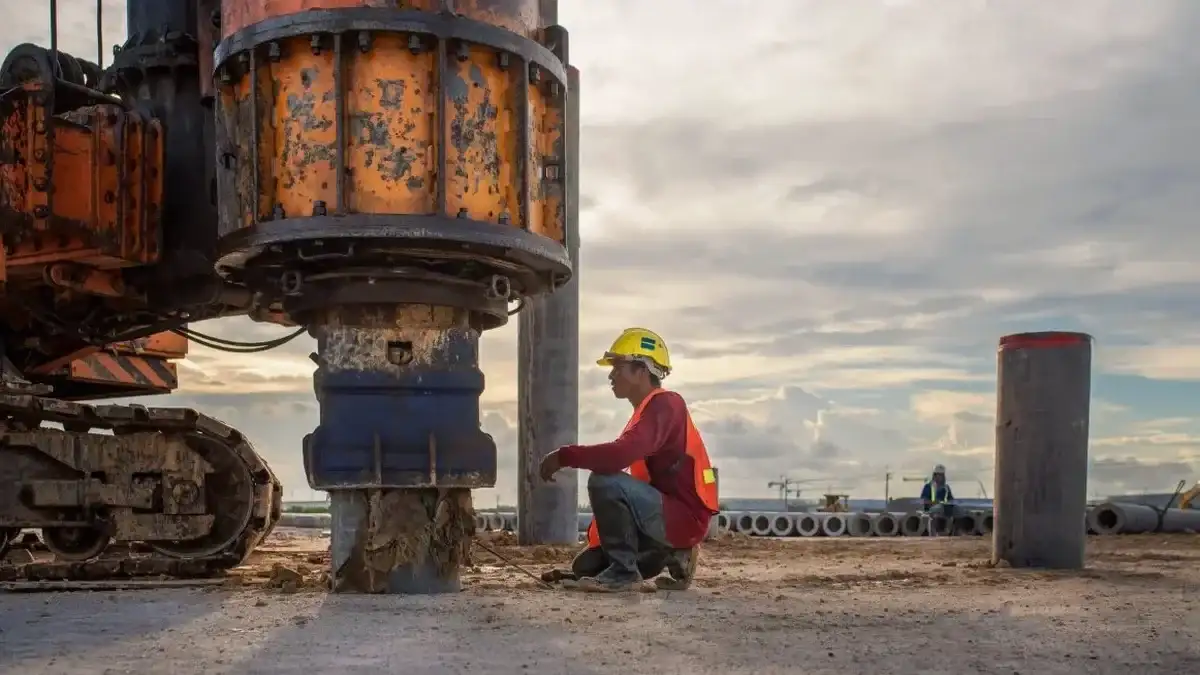
A 20-tonne tracked CPT rig moves across a site in Luton, pushing a conical probe into the ground at a constant rate of 2 cm per second. The cone penetrometer measures tip resistance and sleeve friction continuously, transmitting real-time data to an onboard acquisition system. This is not intermittent sampling. It is a direct, high-resolution profile of subsurface behaviour. In Luton, where glacial deposits and weathered chalk create abrupt transitions, the rig must work efficiently on tight urban plots and former industrial yards. The method eliminates cuttings and minimises disturbance. Pore pressure readings come from a transducer behind the cone, giving a full picture of drainage conditions. For sites near the River Lea floodplain or on the chalk escarpment slopes, this data feeds directly into bearing capacity checks and settlement analysis under Eurocode 7.

A single CPT profile replaces multiple borehole intervals, delivering continuous data from ground surface to refusal depth in a matter of hours.
Our service areas

Process and scope

The geology beneath Luton shifts fast. Much of the town sits on the White Chalk Subgroup, but superficial deposits vary from clay-with-flints on the hilltops to alluvium and river terrace gravels in the valley floor. The water table can be shallow near the Lea, sometimes less than 2 metres below ground level in winter. A cone penetration test logs these transitions without gaps. Friction ratios flag organic silts and soft zones that standard borehole logs might miss. The pore pressure dissipation test measures consolidation characteristics in real time, which matters when designing shallow footings on chalk where settlement governs over bearing failure. For deeper investigations, the CPT data is often correlated with SPT drilling to calibrate strength parameters across the full depth of interest, especially where flint bands in the chalk could cause refusal and require a combined approach.
CPT Testing in Luton: Cone Penetration Test Services
Technical reference — Luton

Local considerations

A warehouse extension in the Dallow Road area went to tender with a standard borehole investigation. The logs showed medium-dense gravel over chalk. The contractor priced shallow pads. During excavation, pockets of soft silty clay appeared in what the borehole log had averaged as uniform material. The client needed a rapid re-assessment. Three CPT soundings completed in one morning mapped the extent of the soft zone, showing a buried channel feature that crossed half the footprint. The foundation design switched to deeper piles with a reduced grid. Without the continuous profile, the soft spot would have been missed entirely. In Luton's mixed glacial terrain, relying on spot samples alone carries exactly this risk. The cone test catches what discrete sampling misses.

Need a geotechnical assessment?

Reply within 24h.

Email: contact@geotechnical-engineering1.com

Relevant standards

BS 5930:2015 + A1:2020 – Code of practice for ground investigations, BS EN 1997-2:2007 – Eurocode 7: Geotechnical design – Part 2: Ground investigation and testing, BS EN ISO 22476-1:2012 – Geotechnical investigation and testing – Field testing – Part 1: Electrical cone and piezocone penetration test

Technical data

ParameterTypical value
Cone capacity20 tonnes push force
Maximum depthTypically 15-25 m (chalk refusal dependent)
Measurement interval20 mm continuous
Parameters recordedqc, fs, u2, Rf, Bq
Pore pressure dissipationt50 at selected depths
Reporting standardBS 5930:2015 + A1:2020
Soil behaviour typeRobertson (1990) chart classification

Frequently asked questions

What depth can a CPT rig reach in Luton?

Most soundings in Luton reach between 15 and 25 metres. The limiting factor is typically refusal on flint bands within the White Chalk Subgroup. In the alluvial deposits near the River Lea, refusal is less common and depth depends on rig capacity and ground conditions.

How much does a CPT test cost in Luton?

For sites in Luton, CPT testing typically ranges from £120 to £220 per sounding metre depending on mobilisation distance, number of soundings, and whether pore pressure dissipation tests are included. A small site with two soundings to 15 metres will be at the lower end of the unit rate.

Can CPT replace boreholes completely?

CPT provides continuous soil behaviour data but does not recover physical samples. In Luton, where chalk with flints is common, a combined approach works best: CPT for profiling and strength parameters, with targeted boreholes or trial pits to recover samples for laboratory classification and chalk density testing.

How long does a CPT investigation take on site?

A typical Luton site with three soundings to 20 metres depth can be completed in one working day. Data is processed and a preliminary factual report is usually available within 48 hours, with interpreted geotechnical parameters following shortly after.

Location and service area

We serve projects in Luton and surrounding areas. More info.

View larger map