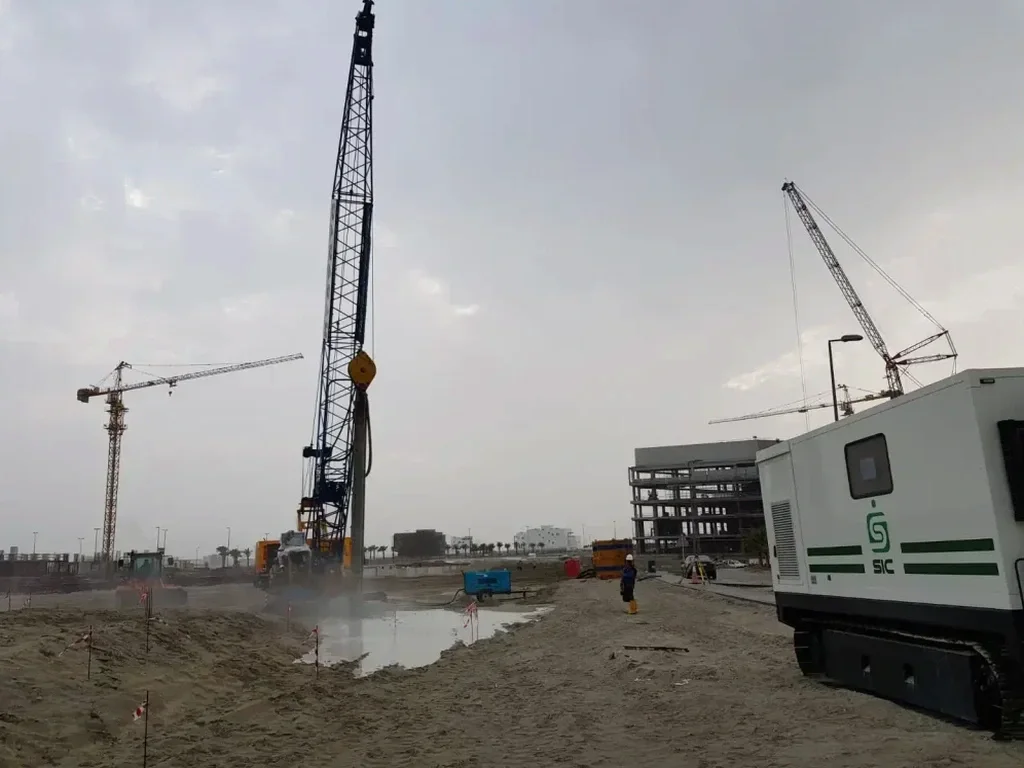
A warehouse extension near Luton Airport Parkway hit unexpected loose fill at 3 metres. The contractor had already brought in the steel frame. We got the call on a Thursday. By Monday we had a vibrocompaction design ready, tailored to the site’s granular profile and the vibration limits imposed by the nearby rail line. Luton sits on a mix of chalk bedrock and overlying Quaternary deposits, with pockets of made ground across the Lea Valley corridor. These conditions demand a ground improvement approach that accounts for variable depth to competent strata. When granular soils need densification, we combine field data from CPT testing with BS EN 1997-2 design principles to specify grid spacing, probe type, and energy input. For sites where fill thickness exceeds 5 metres, we often recommend confirming treatment depth with a seismic refraction survey before mobilising the rig.
Effective vibrocompaction in Luton's mixed granular fills requires grid spacing calibrated to CPT data, not generic charts.