GEOTECHNICAL ENGINEERING1
LUTON
HomeGround improvementStone column design

Stone Column Design for Challenging Ground in Luton

Rigorous testing. Clear reporting.

LEARN MORE

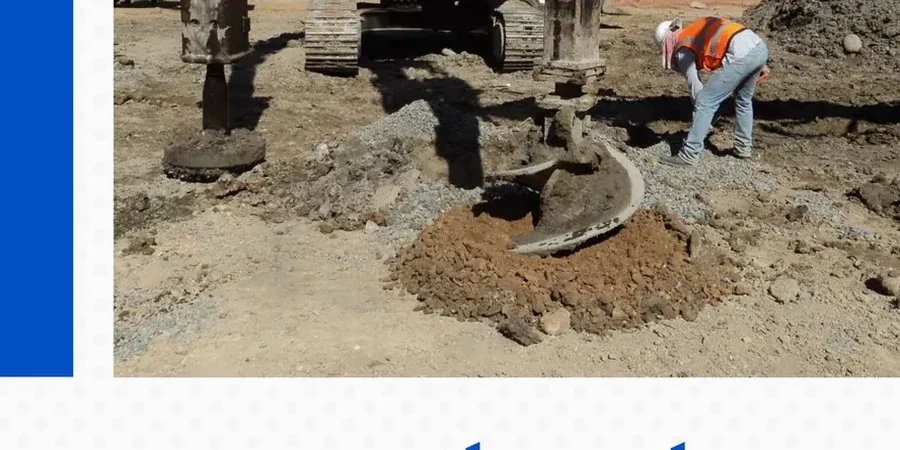
Around Luton, there is a recurring pattern we notice when reviewing site investigation reports for extensions and light industrial units: the ground profile often shifts abruptly from firm chalky till into pockets of soft, silty clay within just a few metres. This is not the uniform chalk plateau some developers expect. The upper reaches of the River Lea and its tributaries have left alluvial deposits in parts of town, and when you combine that with historical brickearth extraction around Stopsley, you get a subsurface that can misbehave under conventional footings. In our experience, stone column design offers a practical alternative to deep piling in these conditions. The method uses compacted granular columns installed by vibration or displacement to reinforce the weak soil matrix, improving both bearing capacity and drainage. It is a technique we lean on regularly for projects where the chalkhead is deeper than anticipated or where made ground from former clay pits complicates the load path. To define the improvement parameters, we always tie the design to site-specific data from a CPT test so the column length and spacing reflect the actual ground variability rather than an assumed stratigraphy.

Good stone column design in Luton is less about the column itself and more about understanding the chalk-putty interface that governs how the ground actually behaves under load.

Our service areas

Process and scope

One mistake we see local builders repeat is assuming that all ground improvement in the Chilterns can be done with a standard vibro rig, without checking the sensitivity of the surrounding soil. In Luton, the chalk can contain dissolution features and grade into structureless chalk putty at depth, which reacts very differently to vibration than a clean sand or gravel. That is why a well-executed stone column design must start with a careful assessment of the undrained shear strength of the cohesive layers and the friction angle of the granular fill. Our design process follows BS EN 1997-1:2004, treating the columns as a composite ground mass where stress concentration on the stiffer columns is balanced against the confinement provided by the native soil. We typically run settlement analyses using Priebe’s method or axisymmetric finite element models when the loading is irregular. The specification then dictates the column diameter, usually 600 to 900 mm, the grid spacing, and the gravel type — often a clean, angular limestone that interlocks well. Quality control during installation is just as critical as the design itself, and we routinely specify post-installation modulus tests to confirm that the predicted stiffness has been achieved.
Stone Column Design for Challenging Ground in Luton
Technical reference — Luton

Local considerations

Eurocode 7, as implemented through BS EN 1997-1 and the UK National Annex, requires that ground improvement designs account for the variability of the natural ground and the sensitivity of the structure to differential settlement. In Luton, this requirement becomes essential where chalk dissolution hollows create abrupt stiffness contrasts over a single building footprint. A stone column layout that looks adequate on paper can underperform if the columns bottom out in a zone of softened chalk that densifies unevenly under load. The risk of post-construction settlement is real, particularly in the Marsh Farm and Leagrave areas where alluvial silts can be thicker than the borehole logs suggest. We mitigate this by linking the column termination depth to CPT cone resistance in real time during installation, rather than relying on a predetermined depth. Without that rigour, even a well-designed grid can leave a structure with tilting or cracking within the first few wet seasons.

Need a geotechnical assessment?

Reply within 24h.

Email: contact@geotechnical-engineering1.com

Relevant standards

BS EN 1997-1:2004 (Eurocode 7 – Geotechnical design), BS 5930:2015 (Code of practice for ground investigations), BRE BR 391 (Specifying vibro stone columns)

Technical data

ParameterTypical value
Typical column diameter0.6 to 0.9 m
Area replacement ratio10% to 30%
Improvement factor (n₀)2.0 to 4.0
Design ground bearing pressure100 to 250 kPa
Settlement reduction target40% to 70% vs untreated ground
Gravel fill specificationClean angular limestone, 20–75 mm

Frequently asked questions

What does a stone column design for a site in Luton typically cost?

For a residential or light commercial project in Luton, the design fee generally falls between £1,060 and £3,680, depending on the building footprint, the complexity of the ground profile, and the level of analysis required. A straightforward scheme on firm chalk till sits at the lower end, while a site with deep soft clay pockets or a requirement for finite element settlement modelling moves towards the upper range.

How long do stone columns last in chalk terrain?

When designed and installed correctly, stone columns are a permanent ground improvement solution. The limestone gravel used as fill is durable and chemically compatible with the chalk environment in Bedfordshire, so we do not see degradation issues. The key to longevity is ensuring the columns are fully penetrating the soft layer and seated on competent material; if that is achieved, the improved ground will perform for the design life of the structure.

Can stone columns be used in Luton's chalk dissolution zones?

Yes, but with careful investigation. Chalk dissolution features can create localised voids or very soft infill, and the stone column design must be adapted accordingly. We typically require a denser CPT grid across the footprint to map the extent of any dissolution hollow, and the column depth may need to vary significantly within the same site to ensure the load is transferred past the disturbed zone.

What is the difference between vibro replacement and vibro displacement stone columns?

The choice depends on the sensitivity of the surrounding soil. Vibro displacement uses a poker to push the soil laterally without extracting material, which suits low-sensitivity, cohesive soils where you want to maximise lateral confinement. Vibro replacement removes a portion of the soil and replaces it with gravel, which is safer in more sensitive clays — the type we occasionally encounter in the alluvial pockets near the River Lea — where displacement could cause excessive heave or disturbance to adjacent services.

Location and service area

We serve projects in Luton and surrounding areas.

View larger map